
Istanbul, Türkiye · Aluminium Industry Insights
Aluminium Systems Blog & Expert Guides
Technical insights, specification guidance and B2B export knowledge from the Afes Aluminium team.
Certified Architectural Aluminium Envelope Systems
Engineered for extreme wind pressure, high thermal resistance, and seismic movement allowances across commercial and high-density residential developments in Japan.

- Thermal Rating: Polyamide PA66 Barrier
- Acoustic: Rw 38 dB Sound Reduction
- Waterproof: JIS A-4 Level Sealant

- Profile Alloy: 6063-T6 Architectural Grade
- Glazing: Low-E Double Tempered Glass
- Feature: Integrated Mosquito Mesh Screen

- Air Permeability: Grade 4 Airtightness
- Insulation: U-Value < 1.4 W/m²K
- Hardware: Multi-Point European Security Lock

- Wind Resistance: Up to 6000 Pa Structural Load
- Impact Resistance: Laminated Safety Glass
- Drainage: Hidden Multi-Chamber Gutter

- Design: European Inward Tilt-Turn Mechanism
- Gasket: EPDM Triple Synthetic Rubber Seal
- Finish: Fluorocarbon PVDF / Anodized

- Security: Stainless Steel Security Mesh
- Sill: Flush Recessed Threshold Rail
- Application: High-Rise Apartments & Commercial

- Passive Standard: U-Value ≤ 0.8 W/m²K
- Glazing: Argon-Filled Triple Low-E Glass
- Acoustic: Rw 44 dB High Attenuation

- System Scope: Coordinated Window & Door Package
- Customization: BIM/CAD Tailored Profiles
- Longevity: 30+ Year Anti-Corrosion Coating
Navigating Japan’s Commercial Building Envelope Rigors
An in-depth guide on seismic inter-story drift accommodation, dynamic typhoon wind pressure resistance, and zero-energy building (ZEB) compliance for Japanese commercial property developments.
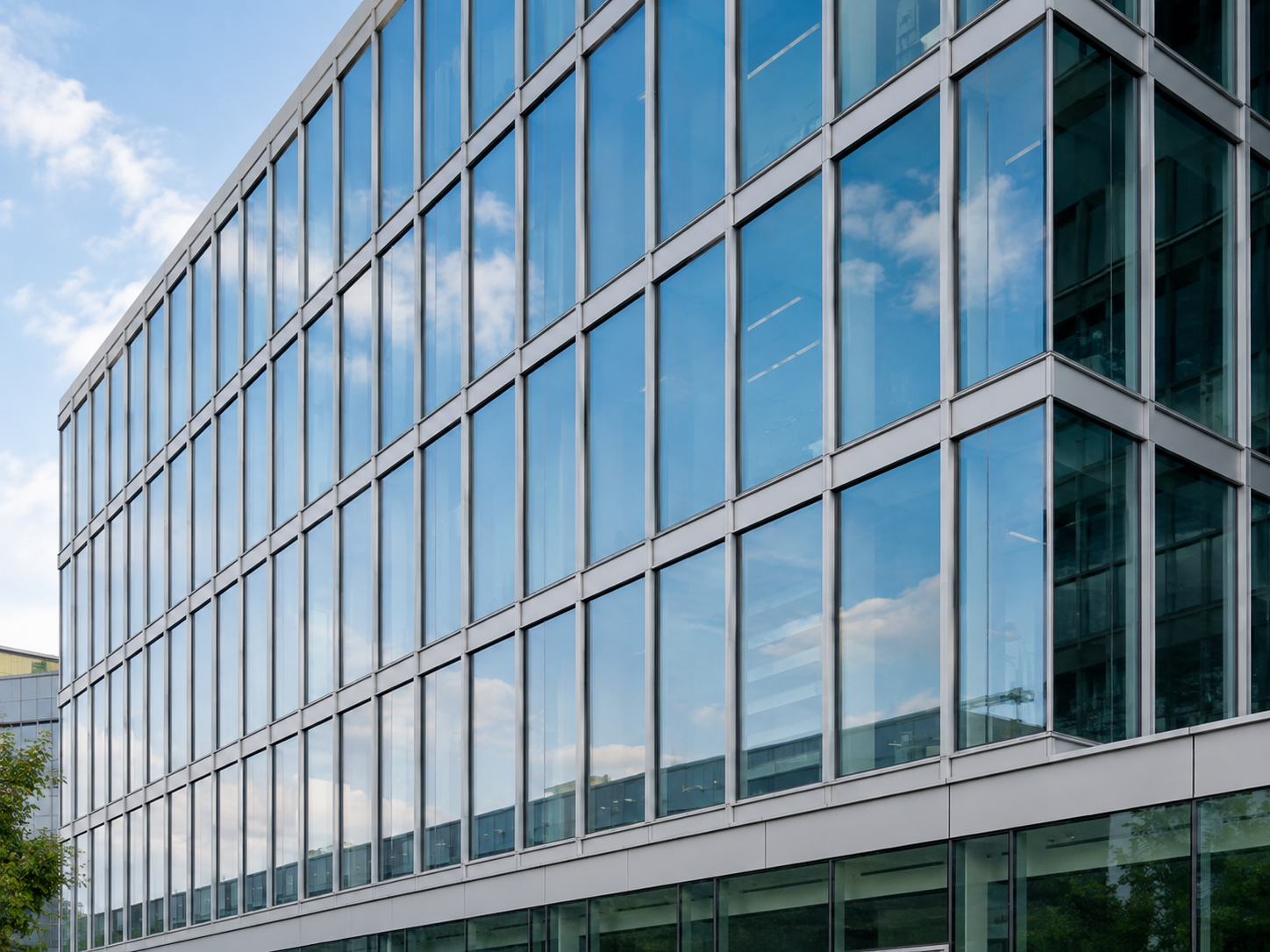
Designing, manufacturing, and exporting commercial building envelope systems for the Japanese architectural landscape presents a unique matrix of structural, climatic, and regulatory challenges. Japan’s building code landscape—dictated by the Ministry of Land, Infrastructure, Transport and Tourism (MLIT) and framed within strict Japanese Industrial Standards (JIS A 4702 for windows and doors, JIS A 1414 for curtain wall performance)—demands precision engineering that far surpasses standard international specs.
Commercial facades operating in urban epicenters like Tokyo, Osaka, and Yokohama must simultaneously solve three core challenges: seismic drift endurance, severe typhoon pressure protection, and extreme thermal efficiency aligned with Japan's target of reaching Net Zero Energy Building (ZEB) status for all newly constructed public and commercial edifices by 2030.
1. Seismic Shear & Inter-Story Drift Management
Because Japan experiences frequent seismic events, building envelopes cannot be rigidly attached to structural concrete or steel frames. Commercial curtain wall systems and oversized structural windows exported to Japan are engineered with specialized sway joints, sliding stack joints, and elastic silicone anchors capable of tolerating an inter-story drift ratio of 1/100 to 1/150 without glass cracking, weather seal failure, or permanent extrusion deformation.
2. Typhoon-Level Water Tightness & Dynamic Wind Resistance
During the annual typhoon season, coastal commercial towers face driven rain and wind velocities generating positive and negative pressures exceeding 5,000 to 6,000 Pascals (Pa). Advanced envelope manufacturers utilize multi-stage pressure equalization chambers, continuous EPDM gaskets, and concealed gravity drainage gutters that guarantee zero water infiltration under dynamic pressures up to 1,500 Pa (equivalent to JIS W-5 rating).
3. Thermal Barrier Engineering & ZEB Alignment
With the implementation of the 2025 Revised Building Energy Efficiency Act, non-residential buildings are subject to strict primary energy consumption standards. High-performance building envelopes incorporate multi-cavity polyamide (PA66 GF25) thermal breaks, warm-edge spacer bars, and low-emissivity (Low-E) double or triple glazing filled with 90%+ Argon gas. This allows window-wall assemblies to achieve overall U-factors as low as 0.8 to 1.2 W/m²K, minimizing HVAC operational costs in both hot Japanese summers and sub-zero winter regions like Hokkaido.
Localized Application Scenarios Across Japan
Tailoring building envelope profile depths, glass coatings, and anchorage hardware to specific regional climate zones and urban typologies across Japan.
Tokyo & Osaka High-Rises
High-density commercial towers demand unitized curtain wall packages with integrated slim-line sliding glass units. Focus rests on sound attenuation (Rw ≥ 40 dB) against heavy traffic noise and high structural stiffness under thermal expansion.
Hokkaido Sub-Zero Zones
Cold-climate commercial projects in Sapporo require triple-glazed thermal break casement windows with PA66 thermal barriers up to 34mm depth to eliminate condensation and maintain interior surface temperatures above 15°C.
Okinawa Coastal Resorts
Severe typhoon paths and salt-heavy marine air necessitate PVDF fluorocarbon coatings (exceeding 30 microns thickness) or 25-micron anodized finishes, combined with laminated hurricane impact safety glass.
Nagoya & Yokohama Mixed-Use
Modern mixed-use developments demand uniform aesthetics across storefront entrance doors, heavy-duty lift-and-slide terrace openings, and glass spandrels, ensuring color matching across all structural elements.
Market & Regulatory Trends Shaping Japanese Facades
Understanding key market evolutions empowers developers and procurement officers to specify building systems that remain compliant and valued for decades.
1. Accelerated ZEB & CASBEE Standards
Japan’s green building evaluation system (CASBEE) and ZEB benchmarks heavily incentivize envelope systems with ultra-low thermal transmittance (U-value) and high Solar Heat Gain Coefficients (SHGC) tailored for seasonal daylighting optimization.
2. Prefabricated Unitized Facade Preferece
To counteract skilled labor shortages on Japanese construction sites, developers are shifting away from stick curtain walls toward factory-assembled, unitized building envelope panels pre-fitted with double/triple glazing units and fire-rated insulation.
3. Hybrid Fire-Resistant & Structural Glazing
Tight Japanese urban fire zones mandate specialized fire-rated aluminum profiles combined with intumescent seals and wired/ceramic fire glass capable of offering 30 to 60 minutes of structural integrity against thermal radiation.
Why Top Global Contracting Teams Partner With Us
From Kadıköy, Istanbul to job sites across Japan—bridging complex architectural concepts with rigid technical execution and reliable B2B export logistics.
Precision Aluminium System Sourcing & Coordination
We operate at the center of world-class aluminium extrusion and fabrication hubs. Our workflow begins with technical shop drawings and structural calculation reviews rather than generic catalog sales. Before issuing a quotation, our engineering export team evaluates your elevation schedules, wind-load assumptions, glass dead-loads, thermal performance targets, and destination port logistics.
Frequently Asked Questions by Buyers Serving Japan
Clear answers on certification compliance, technical drawings, sea freight lead times, and customization possibilities.
Six-Stage Global Project Execution Framework
Ensuring flawless execution from first architectural drawing evaluation to site arrival in Japan.
Elevation & Spec Review
Share CAD drawings, opening schedules, glass requirements, target U-values, and Japanese project site location for structural review.
Engineering Validation
Our technical team verifies wind pressure calculations, glass thickness choices, thermal break widths, and seismic joint details.
Commercial Proposal
Issuance of itemized system proposal detailing profile series, glass build-up, surface finishes, hardware brands, and FOB/CIF Incoterms.
Precision Production
Extrusion, thermal break crimping, CNC machining, surface coating, and double/triple glazing assembly under strict quality control.
Crating & Logistics
Custom wooden crate packaging, floor-by-floor container loading diagrams, and preparation of export documentation.
Site Installation Support
Delivery of detailed installation manuals, anchor point guidance, and direct technical consultation for contractor installation teams.
Planning a Commercial Building Envelope Tender in Japan?
Submit your opening schedules, architectural drawings, or technical performance specifications for an immediate engineering and commercial quotation.
Get Catalog