
Istanbul, Türkiye · Aluminium Industry Insights
Aluminium Systems Blog & Expert Guides
Technical insights, specification guidance and B2B export knowledge from the Afes Aluminium team.
Certified Acoustic & Thermal Window Systems for Export
High-performance fenestration units engineered specifically for B2B contractors, project developers, and façade specialists in the Netherlands.

Thermal Break Soundproof Openswing Windows
- Sound Reduction: Rw up to 45 dB
- Thermal Insulation: Uw ≤ 1.1 W/m²K
- Frame Depth: 75mm Polyamide Strip
- Glazing: Double Laminated Acoustic Glass

Energy Efficient Noise Reduction Casement Windows
- Sound Reduction: Rw up to 42 dB
- Thermal Insulation: Uw ≤ 1.2 W/m²K
- Profile: 6063-T6 Architectural Grade
- Application: Urban Office & Residential

European Inward Opening French Casement Windows
- Sound Reduction: Rw up to 44 dB
- Thermal Insulation: Uw ≤ 1.0 W/m²K
- Feature: Dual EPDM Weather Sealing
- Design: Slimline Historic Profile Option
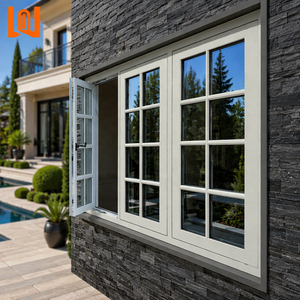
Commercial Double Glazed Vinyl / PVC Casement Windows
- Sound Reduction: Rw up to 40 dB
- Thermal Insulation: Uw ≤ 0.95 W/m²K
- Profile: Multi-Chamber Steel Reinforced
- Screen: Magnetic Integrated Flyscreen
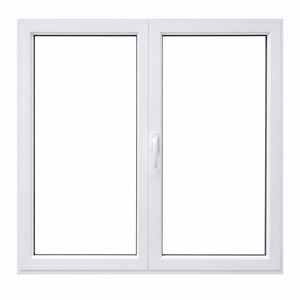
Sealed Acoustic Barrier Double Casement Windows
- Sound Reduction: Rw up to 48 dB
- Thermal Insulation: Uw ≤ 0.85 W/m²K
- Glazing: Heavy Asymmetrical Triple Glaze
- Target: High-Noise Infrastructure Zones
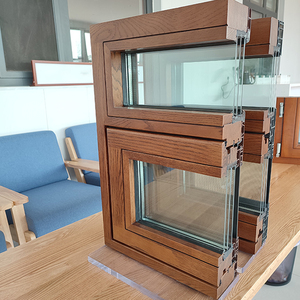
Aluminum-Clad Wood Tilt & Turn Soundproof Windows
- Sound Reduction: Rw up to 46 dB
- Thermal Insulation: Uw ≤ 0.80 W/m²K
- Interior: Engineered Solid Timber Core
- Exterior: Weatherproof Aluminum Shield
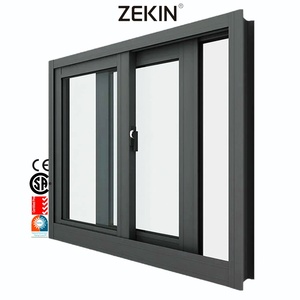
Acoustic Laminated Glass Heavy-Duty Sliding Windows
- Sound Reduction: Rw up to 41 dB
- Thermal Insulation: Uw ≤ 1.3 W/m²K
- Mechanism: Lift & Slide Precision Rollers
- Glass: Saflex Acoustic PVB Interlayer
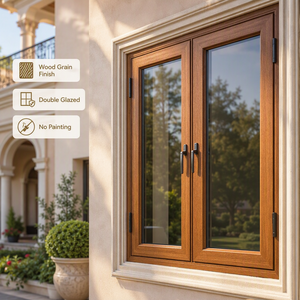
Stainless Steel Reinforced Wood-Grain UPVC Windows
- Sound Reduction: Rw up to 43 dB
- Thermal Insulation: Uw ≤ 0.90 W/m²K
- Certification: CE Marked / EN 14351-1
- Finish: UV-Resistant Renolit Foil
Acoustic Insulation Engineering for the Dutch Built Environment
The Netherlands presents a unique confluence of high urban density, intricate transport networks, strict environmental building standards, and challenging coastal microclimates. Managing noise pollution in regions such as the Randstad conurbation—encompassing Amsterdam, Rotterdam, The Hague, and Utrecht—requires specialized fenestration design. As a direct-to-contractor factory and exporter, our engineering methodology integrates high-mass glazing arrays, multi-chamber thermal breaks, and airtight perimeter seals to combat both airborne urban noise and low-frequency traffic rumble.
Understanding Dutch Sound Insulation Norms: NEN 5077 and ISO 717-1
In the Dutch construction regulatory framework, sound insulation performance is dictated by the NEN 5077 standard (Geluidwering in gebouwen). This standard measures the characteristic noise level difference ($G_A$) between exterior sound emissions and interior living spaces. To achieve comfortable living conditions in residential developments adjacent to major arterial roads (such as the A10 beltway around Amsterdam or the A2 corridor) or within Schiphol Airport’s noise contours, exterior facades often require sound reduction values ($R_w$) ranging from 38 dB to over 48 dB.
Standard double-glazed windows typically yield an $R_w$ value of merely 28 dB to 32 dB, which proves wholly inadequate for Dutch urban infill projects. Our custom-manufactured soundproof window systems utilize asymmetric acoustic laminated glass units combined with heavy gas fillings (Argon/Krypton) and viscoelastic PVB interlayers (e.g., Saflex or Trosifol Sound Control) to suppress resonance frequency dips.
| Glazing Build-Up Matrix | Acoustic Rating ($R_w$) | Low-Freq Correction ($C_{tr}$) | Thermal Metric ($U_w$) | Target Application Zone |
|---|---|---|---|---|
| 4mm Float + 16Ar + 4mm Float (Baseline) | 32 dB | -4 dB | 1.3 W/m²K | Suburban Low-Noise Residential |
| 6mm Toughened + 16Ar + 44.2 Acoustic PVB | 39 dB | -5 dB | 1.1 W/m²K | Urban Infill & Commercial Arterials |
| 8mm Toughened + 20Ar + 66.4 Acoustic PVB | 44 dB | -6 dB | 0.95 W/m²K | Schiphol Flight Path & Tram Lines |
| 10mm Acoustic Laminate + 16Ar + 6mm + 16Ar + 8.4 Acoustic PVB | 48 dB | -7 dB | 0.80 W/m²K | Industrial Borders & Port Zones |
Thermal Efficiency and BENG Compliance (Bijna Energieneutrale Gebouwen)
As of January 2021, all new building permit applications in the Netherlands must satisfy BENG requirements. Fenestration systems play a pivotal role in dictating the BENG 1 metric (energy demand of the building envelope). Our thermally broken aluminum profiles utilize polyamide insulating strips (PA66 GF25 with 25% glass fiber reinforcement) ranging from 24mm to 39mm in depth. This structural break reduces linear thermal bridging ($\Psi$-values) to less than 0.04 W/mK, allowing project developers to achieve holistic envelope U-values ($U_w$) well below the mandatory Dutch maximum threshold of 1.4 W/m²K, easily reaching passive-house grades of 0.8 W/m²K when combined with triple pane low-E insulating units.
Localized Dutch Application Scenarios
Engineered for architectural harmony, structural wind-load compliance, and acoustic comfort across diverse Netherlands microclimates.
Amsterdam Canal Belt & Historic Monumental Renovation
Historic structures in the Grachtengordel require ultra-slim sightlines that mimic traditional steel or timber frames while delivering modern sound dampening against street traffic, nightlife, and canal boat engines. Our custom slim-frame aluminum casement and tilt-and-turn series incorporate stepped profiles with concealed hinges, preserving historic aesthetics while delivering up to 45 dB sound reduction.
Rotterdam High-Rise Towers & Port Zone Developments
Rotterdam’s iconic vertical architecture faces extreme coastal wind pressures (NEN-EN 12210 Wind Load Class C5/B5) alongside heavy low-frequency noise from port operations and freight railways. Our reinforced heavy-duty curtain walls and inward-opening window profiles feature structural silicone glazing and multi-point perimeter locking (G-U and Roto hardware) engineered to withstand wind gusts up to 2400 Pa while maintaining air permeability to Class 4 standards.
Schiphol Noise Contour Zone (Haarlemmermeer & Amstelveen)
Properties situated beneath the primary flight paths of Schiphol Airport (such as the Buitenveldertbaan or Kaagbaan runways) experience intense peak intermittent noise events exceeding 85 dBA. We supply specialized triple-sealed window assemblies featuring heavy asymmetrical glass configurations (e.g., 10mm acoustic laminate + 16mm cavity + 6mm toughened + 16mm cavity + 8.4mm acoustic laminate), reducing indoor ambient peak sound to under 30 dBA.
Waterfront Residential Villas (Wassenaar, Zeeland & IJburg)
Coastal and waterfront developments demand superior salt-mist corrosion resistance (Qualicoat Class 2 powder coating) alongside large-format sliding doors that do not compromise acoustic isolation. Our lift-and-slide series provides smooth operation for glass sashes weighing up to 400 kg while maintaining full EPDM compression seals when closed, eliminating wind whistle and moisture ingress during North Sea storms.
Key Fenestration Market Trends in the Netherlands (2025–2030)
The Dutch window and door sector is undergoing a rapid transformation driven by strict European Union decarbonization mandates, the circular economy policy framework (Het Nieuwe Normaal), and evolving tenant demands for acoustic wellness. B2B importers, main contractors, and architects must adapt to several critical market vectors:
1. The Shift Toward Circular & Hydro-Certified Aluminum Extrusions
Traditional un-recyclable PVC frames are increasingly scrutinized under Dutch municipal procurement guidelines. High-grade architectural aluminum alloys (6063-T5 and 6063-T6) have emerged as the preferred material due to their infinite recyclability without structural degradation. Our factory utilizes primary aluminum billets produced using low-carbon hydropower smelting, achieving a carbon footprint of under 4.0 kg CO2/kg Al, directly contributing to lower whole-life carbon calculations (MGI / MPG scores) required for Dutch building permits.
2. Acoustic Laminated Glass with Advanced Thermal Low-E Coatings
Historically, acoustic performance required heavy, thick single-pane glass, which sacrificed thermal performance. Modern Dutch building specifications demand composite performance. By deploying soft-coat magnetron Low-E coatings on Surface #2 and Surface #5 of a triple-glazed unit, combined with sound-damping PVB layers on Surface #3, we deliver windows that reflect far-infrared heat back into the interior during harsh Dutch winters while simultaneously scattering sound wave frequencies between 100 Hz and 4000 Hz.
3. Integration of Security and Smart Ventilation (PKVW Compliance)
Acoustic seals must not compromise indoor air quality or security. Dutch homeowners and commercial tenants expect compliance with the Politiekeurmerk Veilig Wonen (PKVW) security certification. Our soundproof windows incorporate multi-point security locking hardware (RC2 and RC3 resistance classes according to EN 1627) and can be factory-fitted with acoustic trickle vents (such as acoustic slot ventilators delivering 35 dB to 42 dB sound attenuation even in the open position).
Direct-From-Factory Manufacturing Excellence
Why Dutch developers and façade engineering firms partner with our manufacturing facilities for export projects.
European CE & EN 14351-1 Certification
Every window unit manufactured in our facilities carries full CE documentation and Declaration of Performance (DoP) certificates verified under European standard EN 14351-1, ensuring seamless customs clearance at the Port of Rotterdam.
Precision Acoustic Testing Laboratory
Our in-house acoustic testing chambers measure sound transmission loss across frequency bands from 100 Hz to 5000 Hz. We provide verifiable lab test reports for project submittals and acoustic engineering validation.
Qualicoat Class 2 Powder Coating
To resist the corrosive coastal saline climate of the North Sea, all profile surfaces undergo automated pre-treatment and zero-VOC architectural powder coating conforming to Qualicoat Class 2 hyper-durable standards.
Containerized Logistics to Randstad Sites
We supply fully export-packed, floor-by-floor tagged, A-frame wooden crate shipments directly to job sites in Amsterdam, Rotterdam, Utrecht, or Eindhoven, minimizing onsite sorting time and preventing transit damage.
Frequently Asked Questions by Dutch Project Managers & Architects
Partner with a Certified Soundproof Windows Exporter
Submit your project elevation drawings, window schedules, and acoustic specifications for a detailed engineering review and competitive direct-from-factory quotation.
Get Catalog