
Istanbul, Türkiye · Aluminium Industry Insights
Aluminium Systems Blog & Expert Guides
Technical insights, specification guidance and B2B export knowledge from the Afes Aluminium team.
Featured Custom Profiles & Engineering Components
Explore our flagship custom extruded profile solutions manufactured to precise international standards including ISO 9001, CE, and EN 755/12020 tolerance benchmarks. Select any item below to request immediate technical specifications and factory-direct quotation packages.
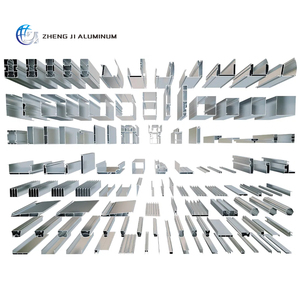
- Alloy: 6063-T5 / 6061-T6
- Application: Wall Corner Protection
- Finish: Anodized / Powder Coated
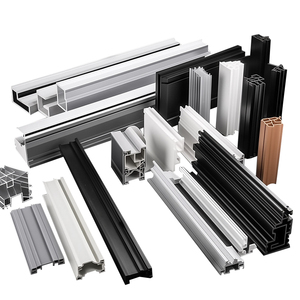
- Material: Rigid UV-Stabilized PVC
- Feature: High Impact Resistance
- Application: Architectural Building Envelope
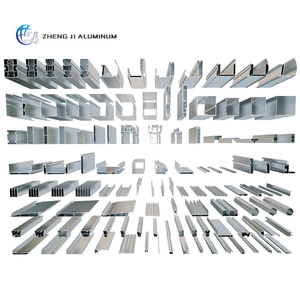
- Tolerance: Precision ISO 2768-m
- Die Development: Bespoke CAD/CAM
- Application: Structural Frameworks
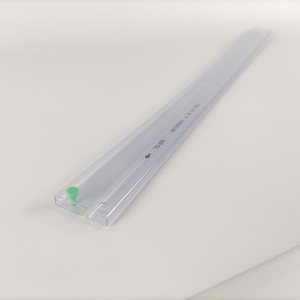
- Material: Optical Grade PMMA
- Transmittance: 92% Light Diffusion
- Application: LED Lighting & Decorative Frames
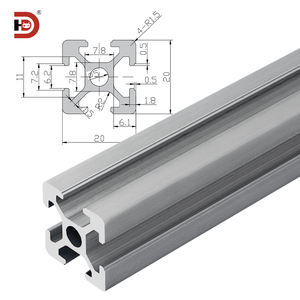
- Slot Width: 6mm T-Slot Profile
- Services: CNC Cutting & Milling
- Application: Automation & Assembly Lines
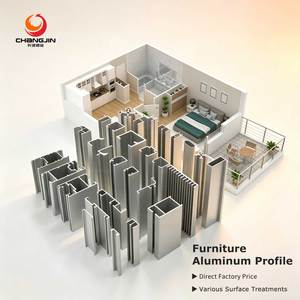
- Certification: ISO 9001 / CE / Qualanod
- Surface: Custom Color Anodizing
- Application: High-End Furniture & Joinery
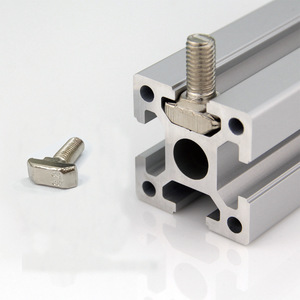
- Compatibility: 6mm Slot Aluminium Profiles
- Grade: Zinc-Plated Class 8.8 Steel
- Application: Structural Frame Connection
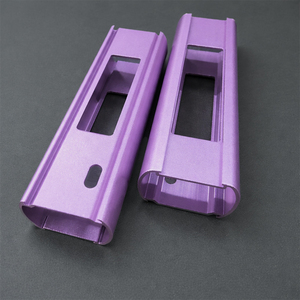
- Alloy Matrix: 6000 Series Structural
- Temper: T5, T6 Heat Treated
- Application: Heavy Machinery & Structural Rail
1. Executive Summary: The 2026 Custom Profiles Manufacturing Landscape
The global market for custom profile manufacturing—spanning non-ferrous aluminum extrusions, technical engineering thermoplastics (PVC, ABS, PC), and optical-grade acrylics (PMMA)—has transitioned into a precision-driven engineering discipline. Driven by demanding architectural standards, automotive lightweighting initiatives, industrial automation, and modern building envelope thermal performance mandates, project developers and original equipment manufacturers (OEMs) require significantly higher technical diligence from their tier-1 profile suppliers.
Today's custom profile procurement goes far beyond matching simple cross-sectional CAD files. B2B procurement professionals must evaluate complex metallurgical compositions (such as 6063-T5 vs. 6061-T6 aluminum alloys), polymer cross-linking stability, UV-stabilizer packages, die flow dynamics, thermal break integration, and post-extrusion CNC machining capability. Selecting the right profile manufacturer directly impacts structural integrity, thermal efficiency, assembly speed, and total project lifecycle cost.
Procurement Insight: According to global B2B procurement benchmarks, over 38% of profile sourcing delays stem from ambiguous drawing tolerances, unverified alloy tempers, and failure to account for thermal expansion differentials during initial die design. Engaging manufacturers with in-house engineering review teams is critical to mitigating re-tooling cycles.
2. Evaluation Criteria for the Top 10 Custom Profile Manufacturers & Suppliers
When shortlisting the top custom profile manufacturing partners globally, procurement leaders must audit candidates against six primary technical competencies. High-performing suppliers distinguish themselves through rigorous verification protocols and seamless vertical integration.
1. Precision Metallurgical & Polymer Control
Top manufacturers maintain strict spectroscopy testing for aluminum billet chemistry and automated resin compounding for polymers to ensure consistent tensile strength, elongation, and color consistency across production batches.
2. In-House Die Design & Tooling Facilities
Custom profile manufacturing relies heavily on optimized extrusion dies. Leading factories utilize multi-axis CAD/CAM simulation software to predict metal or polymer flow stress, reducing die correction rounds and accelerating prototype sign-off.
3. Surface Finishing Integrity & Accreditations
Whether specifying Qualicoat-certified architectural powder coating, Qualanod anodic oxidation, or high-gloss acrylic polishing, top suppliers offer fully integrated surface treatment lines to eliminate transport damage between sub-contractors.
4. Advanced Thermal Break Technology
To meet modern zero-energy building standards, manufacturers must possess crimping and insertion capabilities for glass-fiber-reinforced polyamide (PA66 GF25) thermal barrier strips within complex aluminum window and curtain wall systems.
5. Downstream CNC Machining & Fabrication
Value-added fabrication—including multi-axis CNC drilling, precision miter cutting, tapping, punching, and sub-assembly—transforms raw extruded lengths into ready-to-install industrial and architectural components.
6. Export Packaging & Logistics Discipline
Heavy-duty protective bundling, custom wooden cradles, floor-by-floor job-site marking, and container loading optimization prevent bending, scratching, or salt-air oxidation during transoceanic transit.
3. Technical Material Matrix: Aluminum Alloys vs. Engineering Plastics
Selecting the optimal material profile requires balancing mechanical yield strength, thermal conductivity, environmental resistance, weight, and tooling expenditure. The matrix below outlines primary engineering parameters across mainstream industrial extrusion materials.
| Material Category | Common Grade / Resin | Tensile Strength (MPa) | Key Application Focus | Primary Technical Advantage |
|---|---|---|---|---|
| Architectural Aluminum | 6063-T5 / 6063-T6 | 185 - 240 MPa | Window frames, curtain walls, decorative trims | Exceptional extrudability, superior anodizing surface finish |
| Structural Aluminum | 6061-T6 / 6005A-T6 | 290 - 310 MPa | Industrial machinery, automation workbenches, rail cars | High mechanical strength, excellent weldability and structural rigidity |
| Rigid Polymer Extrusion | High-Impact PVC | 40 - 55 MPa | Building trims, hollow wall moldings, electrical trunking | Self-extinguishing, excellent thermal insulation, chemical resistance |
| Optical Polymer Extrusion | PMMA (Acrylic) | 65 - 80 MPa | LED light diffusers, optical channels, display frames | 92% light transmission, total UV resistance, crystal clarity |
| Thermal Insulation Strip | PA66 GF25 (Polyamide) | 80 - 110 MPa | Thermal break joinery in commercial fenestration | Matches aluminum coefficient of thermal expansion, resists 200°C curing |
4. Strategic Procurement Trends: 2026 to 2030 Industry Dynamics
The global profile manufacturing market is undergoing a rapid evolution driven by decarbonization mandates, smart automation, and supply chain re-shoring. Forward-thinking procurement teams must factor the following macro-trends into their sourcing strategies:
A. Low-Carbon Billet & Green Aluminum Sourcing
With international carbon border adjustment mechanisms (CBAM) coming into force, tier-1 profile manufacturers are increasingly utilizing aluminum billets produced via hydroelectric power or incorporating high ratios of post-consumer recycled (PCR) scrap. Requesting Environmental Product Declarations (EPDs) and verifying Scope 1 and Scope 2 carbon intensity per metric ton of extruded metal has become standard protocol for flagship commercial developments.
B. Complex Micro-Extrusions and Minimal Sightlines
Architectural trends favor ultra-slim sightlines with expansive glass areas. This demands high-pressure extrusion presses capable of pushing thin-walled profiles (down to 1.2mm wall thickness) while maintaining structural deflection compliance under extreme wind loads (up to 3000 Pa wind pressures).
C. Integrated Digital Twin & Automated Die Flow Simulation
Leading manufacturers now employ finite element analysis (FEA) and computational fluid dynamics (CFD) to model molten aluminum and plastic shear rates inside the extrusion die. This digital twin approach identifies air pockets, seam line weaknesses, and non-uniform cooling gradients prior to cutting steel tooling, reducing prototype turnaround times from weeks to days.
5. Enterprise Strengths: Why Partner With Our Global Profile Manufacturing Base
Headquartered in Istanbul, Türkiye—one of the world's most established extrusion and building envelope manufacturing hubs—we provide end-to-end B2B supply chain solutions for contractors, developers, OEMs, and distributors worldwide. Our operation bridges advanced Turkish manufacturing power with strict international project standards.
Drawing & CAD Review
Technical evaluation of opening schedules, tolerances, and wall thickness specs.
Tooling & Die Design
In-house CAD/CAM die cutting with flow simulation and sample extrusion testing.
Precision Extrusion
State-of-the-art automated presses delivering 6000-series alloy and technical polymer shapes.
Surface Treatment
Qualicoat powder coating, color anodizing, and optical surface finishing.
CNC Machining
Precision cutting, drilling, milling, slotting, and thermal break assembly.
Export Logistics
Container optimization, protective wrapping, and export documentation (FOB, CIF, EXW).
Export-First Project Focus
Our dedicated export engineering team conducts all technical correspondence, CAD reviews, and commercial documentation in English, ensuring zero communication gaps from initial inquiry through site delivery.
Whole-Envelope System Integration
We supply fully coordinated opening packages—combining windows, entrance doors, sliding units, curtain wall systems, and louvers under one unified finish batch to eliminate color variance on site.
Rigorous Quality Discipline
Every shipment is accompanied by complete mill test reports (MTR), coating thickness certificates, cross-hatch adhesion results, and dimensional inspection sheets verified against ISO standards.
6. Frequently Asked Questions (FAQ) for B2B Profile Procurement
Ready to Engineer Your Custom Profile Solution?
Send us your CAD drawings (.DWG / .STP), material specs, and estimated quantities. Our Istanbul export engineering team will review your file and deliver a comprehensive technical & commercial quotation within 24 hours.
Inquire Now