
Istanbul, Türkiye · Aluminium Industry Insights
Aluminium Systems Blog & Expert Guides
Technical insights, specification guidance and B2B export knowledge from the Afes Aluminium team.
Featured High-Performance Architectural Glazing Systems
Curated selection of structural glazing, thermal break windows, insulated curtain wall facades, and sliding glass assemblies engineered for modern luxury villas, commercial developments, and high-rise facades.
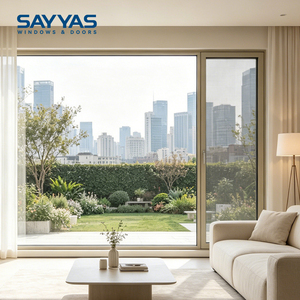
Sayyas JE115-IW Flush Frame Aluminum Window
Ultra-slim architectural glazing with concealed hinges and high-density thermal break insulation designed for luxury villas.
Contact Us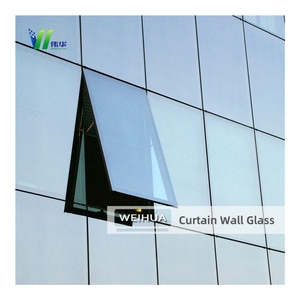
Insulated Glass Unit Curtain Wall Facade
Commercial grade double/triple glazed hollow insulated units integrated into robust aluminum structural mullions.
Contact Us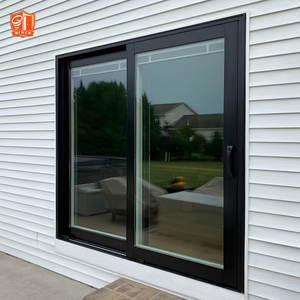
Heavy-Duty Sliding Glass Door with Built-in Blinds
Waterproof magnetic control sliding mechanism featuring double tempered low-E glass for commercial malls and villas.
Contact Us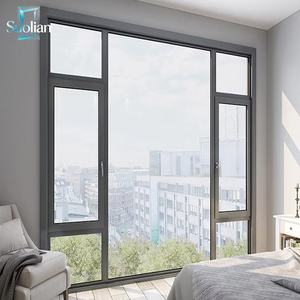
Architectural Casement Window with Decorative Glazing
Customized high-wind-load casement system with specialized decorative acoustic safety glass for luxury estates.
Contact Us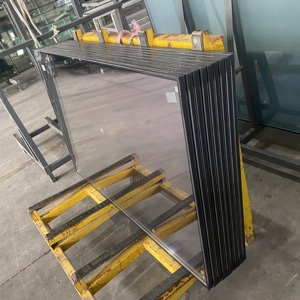
Custom Insulated Hollow Architectural Glass Unit
Engineered argon-filled thermal barrier glass modules custom tailored for complex dynamic facade cladding.
Contact Us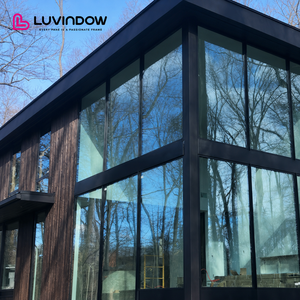
Structural Glazing High-Performance Wall System
Seamless glass envelope structural curtain wall offering high daylight penetration and superior solar heat control.
Contact Us
AS2047 Standard Two-Track Sliding Double Glazed Window
Certified weather-resistant thermal break sliding system engineered to rigorous oceanic structural standards.
Contact Us
Soundproof Open-Swing Window with Integrated Screen
Multi-chamber polyamide break profile providing extreme acoustic dampening (up to 42dB) for luxury residences.
Contact UsThe Architectural Glazing & Building Envelope Paradigm
Modern architectural glazing has evolved from simple passive light-transmitting elements into highly sophisticated, multi-functional building envelope systems. Today's commercial towers, high-end residential complexes, and luxury villas demand glass assemblies that dynamically balance thermal performance ($U_w$), solar heat gain coefficient (SHGC), visible light transmittance (VLT), acoustic insulation ($R_w$), and structural resistance against extreme wind loads.
When selecting international suppliers and exporters for large-scale B2B procurement, project teams must evaluate not only nominal unit pricing but total cost of ownership (TCO), material traceability, EN/ASTM/AS2047 testing certifications, structural silicone structural adhesion integrity, and sea-freight packaging security.
Evaluation Matrix: Top 10 Architectural Glazing Manufacturers & Exporters
Comprehensive technical comparison of leading global glazing fabricators, profile extruders, and building envelope exporters evaluated by technical engineering capability, climate suitability, and export logistics capacity.
| Manufacturer / Brand | Headquarters | Core System Expertise | Thermal Break Tech | Key Export Markets | Compliance Standards |
|---|---|---|---|---|---|
| Afes Aluminium | Istanbul, Türkiye | Custom Facades, Thermal Windows & Doors, Sliding Systems | 24-34mm Polyamide (PA66GF25) | UK, EU, Middle East, Africa, USA | EN 12150, AS2047, ISO 9001, CE |
| Saint-Gobain Building Glass | Courbevoie, France | ECLAZ / COOL-LITE Low-E Glass Units & Electrochromic Glass | Warm Edge Spacers / Structural Bonding | Global Distribution | EN 1279, ISO 14001, ASTM C1036 |
| AGC Glass Europe | Louvain-la-Neuve, Belgium | Vacuum Insulated Glass (Fineo), Solar Control Coatings | VIG Ultra-thin Cavity Seals | Worldwide Export | CE, Cradle to Cradle Certified |
| Schüco International | Bielefeld, Germany | High-end Modular Curtain Walls, Panoramic Sliding Doors | SimplySmart Polyamide Breaks | Global Tier-1 Projects | DIN EN 13830, Qualicoat Class 2 |
| Reynaers Aluminium | Duffel, Belgium | Hi-Finity Slim Line Sliding Doors, MasterLine 8 Windows | High-Insulating (HI+) Polyamide | Europe, North America, Asia | ISO 9001, Minergie Standard |
| YKK AP Inc. | Tokyo, Japan | Thermos Structural Glazing, Hurricane Impact Window Wall | Structural Silicone & Thermal Gaskets | North America, Asia-Pacific | AAMA / WDMA / CSA 101, ASTM E1886 |
| Permasteelisa Group | Vittorio Veneto, Italy | Unitized Custom Double-Skin Facades for Skyscraper Towers | Thermally Isolated Aluminum Modules | Global Megacities | EN 13830, LEED Platinum Alignment |
| Vitro Architectural Glass | Pittsburgh, USA | Solarban Low-E Glass, Starphire Ultra-Clear Glass | Warm Edge & Gas-Filled IGUs | Americas, Middle East | ASTM C1376, NFRC Certified |
| Guardian Glass | Auburn Hills, USA | SunGuard SuperNeutral Glass Coatings & Spandrel Glass | Structural Spacer Technology | Global Export Network | ISO 9001, EN 410 / EN 673 |
| Wicona (Hydro Group) | Ulm, Germany | WICTEC Curtain Walls, Recycled Hydro CIRCAL Aluminium | Continuously Extruded Thermal Barriers | Europe, Middle East, Americas | Qualanod, Qualicoat, Passivhaus |
Core Performance Indicators in Architectural Glazing Sourcing
Thermal Insulation ($U_w$ & $U_g$)
State-of-the-art systems utilize multi-chamber polyamide breaks (PA66GF25 reinforced with 25% glass fiber) to achieve window $U_w$ values below 0.8 W/m²K, essential for passive house compliance in extreme climates.
Structural Wind & Seismic Load
Engineered extrusion profiles manufactured from 6063-T6 or 6005-T6 architectural aluminum alloy withstand positive and negative wind pressures exceeding 5,000 Pa, with deflection ratios capped strictly at L/200 or L/300.
Acoustic Attenuation ($R_w$)
Laminated structural glass incorporating Acoustic Polyvinyl Butyral (PVB) or SentryGlas (SGP) interlayers reduces ambient urban noise pollution by up to 48 dB ($R_w + C_{tr}$), ideal for airport and hospitality projects.
Future Procurement Trends in Architectural Glazing Sourcing
As international construction contracts increasingly integrate carbon accounting, ESG criteria, and tight construction timelines, B2B procurement strategies for architectural glass and aluminum frames are undergoing fundamental shifts:
1. Decarbonized Low-Carbon Aluminum & Recycled Billets
International buyers are enforcing Environmental Product Declarations (EPDs) for extruded profile packages. Procurement preferences favor extruders utilizing post-consumer recycled aluminum or hydro-powered smelting process (emitting less than 4.0 kg CO2e per kg Al compared to the global average of 16.6 kg CO2e/kg Al).
2. Transition from Stick Systems to Prefabricated Unitized Facades
On-site labor shortages and stringent safety regulations are driving high-rise facade procurement toward shop-assembled, factory-sealed unitized curtain wall panels. Prefabricated modules ensure 100% factory-controlled structural silicone curing and accelerate site installation schedules by up to 40%.
3. Vacuum Insulating Glass (VIG) & Slim-Profile Double Glazing
VIG technology—offering 0.4 W/m²K thermal U-values inside an 8.3mm profile thickness—is rapidly replacing heavy, thick triple-glazing units in retrofits and minimal sightline architectural applications, drastically reducing dead-load structural stress on building frames.
4. Building-Integrated Photovoltaics (BIPV) Integration
Glazing exporters are expanding capabilities to integrate semi-transparent cad-telluride or silicon photovoltaic cells into double-glazed spandrels and glass fins, enabling passive commercial facades to act as active renewable power generators.
Key Technological Trends Driving Architectural Glass Evolution
The convergence of advanced material science and digital fabrication has yielded breakthrough capabilities in building envelope design:
2. High-Durability Surface Coatings (Qualicoat Class 3 & PVDF): Fluoropolymer PVDF (polyvinylidene fluoride) and Qualicoat Class 3 super-durable powder coatings resist intense UV radiation, salt-spray corrosion, and chemical degradation in harsh coastal environments, offering 30-year operational finish guarantees.
3. SentryGlas® Ionoplast Interlayers for Overhead & Structural Glass: Replacing traditional PVB in structural fins, glass balustrades, and overhead skylights, ionoplast interlayers provide 5 times the tear strength and 100 times the rigidity, ensuring post-breakage load-bearing safety.
Afes Aluminium: Integrated Engineering & Global Export Hub
Headquartered in Kadıköy, Istanbul—within one of the world's premier aluminum extrusion and industrial fabrication hubs—Afes Aluminium bridges high-precision Turkish profile manufacturing with rigorous international architectural standards.
Technical Rigor
Every quote is preceded by a comprehensive elevation and shop-drawing review conducted in-house by experienced facade engineers.
Customization Capability
Tailored system profile depths, custom die extrusions, specialized glass build-ups, and bespoke hardware color-matching.
Export Logistics Mastery
A-frame wooden crate packing, floor-by-floor container labeling, full export documentation (EUR.1, Certificate of Origin, Bill of Lading).
Architectural Glazing Procurement FAQ
Essential technical and commercial answers for facade contractors, project managers, and sourcing officers inquiring about architectural glazing packages.
Request a Custom Technical & Commercial Proposal
Send your architectural elevation schedules, CAD drawings, and performance specifications directly to our senior export engineering team for a full project review.