
Istanbul, Türkiye · Aluminium Industry Insights
Aluminium Systems Blog & Expert Guides
Technical insights, specification guidance and B2B export knowledge from the Afes Aluminium team.
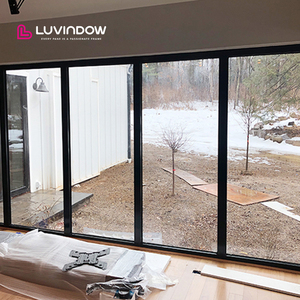
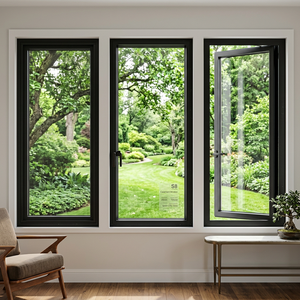
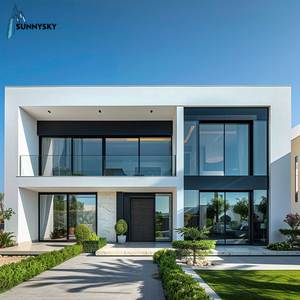
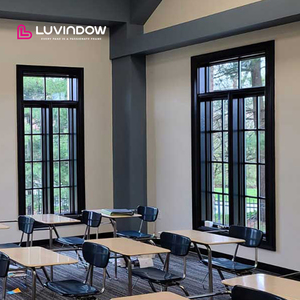
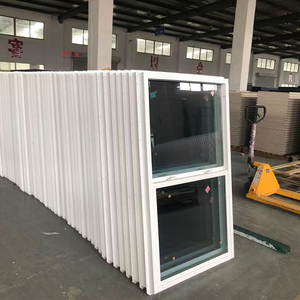
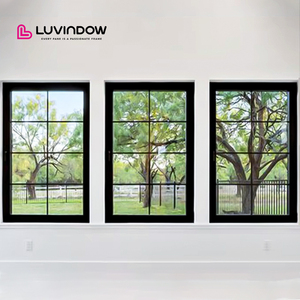
Featured OEM Custom Window Portfolio
Explore our engineering capabilities across high-performance residential, commercial, and structural window configurations built precisely to project specifications.


6063-T6
Architectural Alloy Grade
0.18-0.28
U-Factor Thermal Target (BTU/h·ft²·°F)
PA66-GF25
Polyamide Thermal Barriers
100%
Bespoke Project Engineering
Industrial Strength & OEM Technical Leadership
As a premiere OEM custom windows manufacturer and global supplier rooted in advanced metallurgical processing and architectural engineering hubs, our operations bridge high-precision custom extrusions with comprehensive facade systems. Unlike off-the-shelf distributor suppliers, our custom OEM manufacturing model operates directly from architect drawings, structural specifications, and localized climate requirements.
Our manufacturing workflow leverages primary 6063-T5 and T6 grade aluminum alloys, engineered with glass-fiber reinforced Polyamide 66 (PA66-GF25) thermal breaks. This critical thermal decoupling prevents conductive heat transfer across interior and exterior profile surfaces, allowing B2B partners to achieve ultra-strict building envelope performance standard compliance—including LEED Platinum certifications, Passive House benchmarks, and regional energy codes such as NFRC, AS2047, and CE standards.
Drawing-First Engineering
Every quote starts with a thorough review of structural CAD and BIM models, elevation drawings, wind-load parameters, and glazing specifications to eliminate site adaptation issues.
Full Envelope Coordination
We supply synchronized window, door, curtain wall, and louvre systems from a unified extrusion batch to guarantee 100% color matching and consistent profile sightlines.
Export Logistics Discipline
Custom crate packaging, floor-by-floor container sorting, and complete international documentation (CIF/FOB/EXW) ensure frictionless customs clearance and site handling.
OEM Architectural Window Material & System Comparison
Data-driven technical analysis for architectural specifiers and procurement managers selecting structural window substrates.
| System Substrate / Framing Type | Thermal Conductivity (U-Factor Range) | Structural Load & Wind Resistance | Acoustic Insulation (STC Rating) | Aesthetic & Profile Sightlines | Ideal B2B Application |
|---|---|---|---|---|---|
| Thermal Break Aluminum (PA66) | 0.18 – 0.32 | Ultra-High (Up to 5000 Pa) | 38 - 48 dB | Slim, Modern, Flush Profiles | Luxury High-Rise, Villas, Commercial Facades |
| Aluminum-Clad Timber | 0.15 – 0.26 | High Structural Rigidity | 40 - 50 dB | Classic Warm Wood + Metal Shell | Premium Heritage & Organic Residential |
| High-Impact Multi-Chamber uPVC | 0.16 – 0.28 | Medium to High | 32 - 40 dB | Standard to Wide Profiles | Mass Residential, Modular Housing, Subdivisions |
| Non-Thermal Structural Aluminum | 0.50 – 0.85 | Exceptional (Heavy Duty) | 28 - 35 dB | Minimalist Ultra-Thin Sightline | Interior Partitions, Tropical Non-Conditioned Zones |
Global B2B Window Procurement Trends (2025–2035)
The global architectural openings market is undergoing a fundamental structural transition driven by decarbonization mandates, digitized building information modeling (BIM), and increasing environmental extremes. Key developments shaping future contract manufacturing include:
1. Environmental Product Declarations (EPD) & Low-Carbon Aluminum Sourcing
Forward-thinking developers and primary contractors now require verified EPD certificates detailing Embodied Carbon footprint metrics. The industry is rapidly pivoting toward green aluminum produced using renewable hydroelectric power, alongside post-consumer recycled aluminum scrap (recycling rate above 75%). OEM suppliers capable of documenting circular material lifecycles hold a substantial advantage in winning public infrastructure and commercial tenders across North America and Western Europe.
2. Offsite Prefabrication and Unitized Modular Integration
With global construction jobsite labor costs escalating, procurement models are moving away from field-assembled knock-down (KD) window kits toward fully assembled, unitized facade modules. Factory-installed glass units with pre-integrated flashing, structural anchoring tabs, and automated motorized actuators allow construction teams to install entire window walls in a fraction of traditional sequence timelines.
3. Smart Dynamics: Electrochromic Glass & Photovoltaic Integration (BIPV)
Modern commercial windows are evolving from passive thermal barriers into active building energy management components. Future OEM specifications increasingly incorporate electrochromic dynamic tinting glass that automatically adjusts Visible Light Transmittance (VLT) and Solar Heat Gain Coefficient (SHGC) based on solar irradiance angles, eliminating the need for exterior motorized louvers while drastically cutting HVAC peak loading.
4. Standardized Testing and Global Certification Alignment
Cross-border B2B sourcing demands unified compliance verification. Contract manufacturers must demonstrate rigorous empirical test data verifying performance under localized disaster scenarios—such as cyclic hurricane pressure testing (ASTM E1886/E1996), water penetration under high static pressure (TAS 202), and heavy acoustical dampening near transportation hubs.
Advanced Technological Innovations in Custom Window Manufacturing
To stay competitive, window OEM manufacturers are incorporating cutting-edge materials and precision fabrication tech:
Aerogel & Vacuum Insulated Glass (VIG)
By replacing traditional argon gas fills with micro-vacuum cavities or translucent aerogel layers, window units achieve center-of-glass U-values as low as 0.08 BTU/h·ft²·°F (0.45 W/m²K) at a fraction of standard triple-glazing thickness and weight.
Structural Silicone Glazing & Concealed Vents
Advanced structural bonding techniques enable all-glass exterior aesthetics where frame extrusions are completely hidden from view. Concealed tilt-and-turn operational sashes maintain strict minimalist architectural symmetry while offering high natural ventilation rates.
Nano-Scale Fluorocarbon & PVDF Surface Finishing
Architectural aluminum profiles processed with 3-coat or 4-coat PVDF (Polyvinylidene Fluoride) fluorocarbon coatings withstand coastal salt-spray exposure exceeding 4,000 hours under ASTM B117 standards, guaranteeing 20+ years of chalk- and fade-free performance.
Integrated Smart Home Motorization & Access Control
Hidden multi-point motorized drive units concealed inside frame chambers connect seamlessly to Zigbee, Modbus, or BACnet building automation protocols, allowing automated micro-ventilation, climate-responsive closing, and integrated security alarms.
Frequently Asked Procurement Questions (B2B Buyer FAQ)
Clear, direct answers to common questions asked by international project teams, architects, and procurement directors.
What core documentation is required to generate an accurate custom OEM quote?
To receive an itemized proposal, please provide your structural CAD elevation drawings, window schedule specifying opening quantities, preferred frame substrate (e.g., thermal-break aluminum or aluminum-clad wood), glazing requirements (double/triple, Low-E, laminated, tinted), required RAL color finish, and the destination port for Incoterm calculation (CIF, FOB, EXW).
How do you handle custom extrusion die development for proprietary profile designs?
Our engineering division designs and cuts custom steel extrusion dies in-house. Once CAD drawings are signed off, sample extrusions are produced within 15–20 days for dimensional check and mechanical testing before mass production commences. Tooling costs are frequently credited back upon reaching contractual order volumes.
Can your manufacturing lines meet hurricane impact and severe weather standards for North America and Australia?
Yes. We design and build high-impact profiles reinforced with heavy internal aluminum ribs, multi-point locking mechanisms, and SentryGlas® (SGP) laminated glass interlayers. Our systems are tested to satisfy ASTM E1886/E1996 hurricane impact tests as well as Australian AS2047 structural and water penetration requirements.
What measures are taken to prevent color discrepancies across large-scale commercial orders?
All aluminum extrusions for a given project are batch-processed under strict computerized vertical powder coating lines using premium AkzoNobel or PPG architectural powders. We lock color master samples under spectrometer testing to ensure zero delta-E color drift between windows, entrance doors, and curtain wall components.
What is your standard production lead time and export packaging protocol?
Typical fabrication lead time is 25–35 days following shop drawing approval and deposit receipt. Products are packed using protective film coatings, edge guards, shock-absorbing bubble wrap, and fumigated solid timber or steel-framed export crates labeled according to jobsite elevation and floor plan codes.
Do you support sample requests and mock-up testing prior to full batch manufacturing?
Absolutely. We regularly produce physical corner samples or full-scale performance mock-ups for third-party laboratory air, water, and structural chamber testing prior to full project manufacturing release.
Ready to Build Your Custom Architectural Window Scope?
Partner with a proven OEM/ODM custom windows manufacturer and global supplier. Send your drawings and project specifications to our senior engineering export team today for an immediate technical review and commercial proposal.
Inquire Now