
Istanbul, Türkiye · Aluminium Industry Insights
Aluminium Systems Blog & Expert Guides
Technical insights, specification guidance and B2B export knowledge from the Afes Aluminium team.
Featured Architectural Extrusion Profiles
Explore our engineering-grade aluminum and co-extruded polymer profiles tailored for curtain walls, structural window assemblies, interior decoration, and thermal barrier systems.
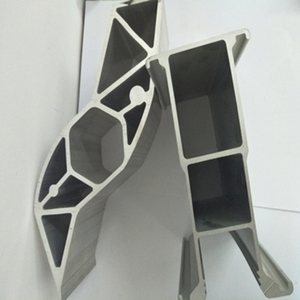
Structural Aluminum Extrusion Profiles
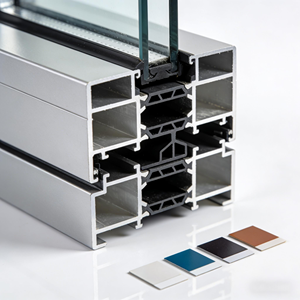
OEM Custom Mirror Frame & Architectural Housing Profiles
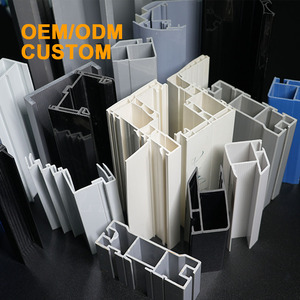
UV-Resistant ABS/PVC Co-Extruded Architectural Profiles
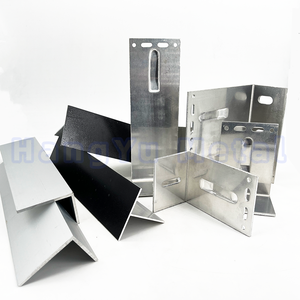
Modern Aluminum T & L Structural Wall Profiles
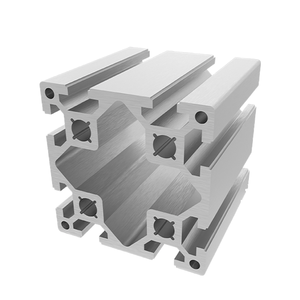
6000 Series Architectural Aluminium Profiles
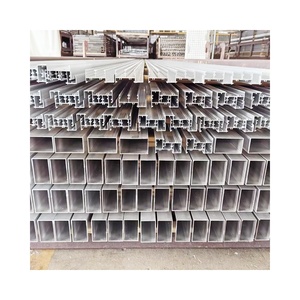
High-Grade Anodized Architectural Window Profiles
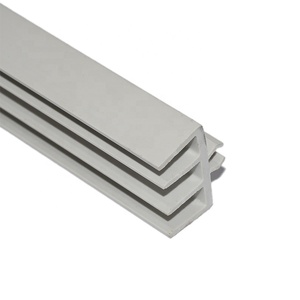
Engineered PVC Plastic Extrusions for Sliding Doors
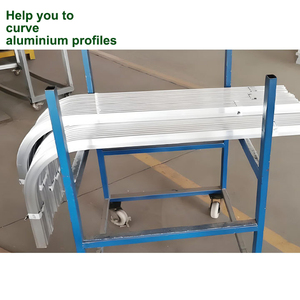
Precision Curved & Fabricated Aluminum Architectural Profiles
Manufacturing Authority & Export Infrastructure
Why leading global main contractors, facade engineers, and building material importers trust our China extrusion mills for mission-critical architectural builds.
Advanced Metallurgical Alloys
We utilize prime-grade 6000-series aluminum billets (6063, 6061, 6005A, 6082) with precise magnesium-silicon control, undergoing strict homogenization heat treatment to ensure tensile strength ratings exceeding 245 MPa.
Qualicoat & Qualanod Finishing
Our state-of-the-art vertical powder coating and electrochemical anodizing lines conform strictly to Qualicoat Class 2 / Class 3 and Qualanod specifications, guaranteeing color fastness and salt-spray resistance up to 3000 hours.
Full-Value Deep Fabrication
Beyond standard extrusions, we operate multi-axis CNC machining centers, precision stretch bending, robotic welding, and corner crimping to deliver plug-and-play assembly modules straight to job sites.
Strategic Technical Guide: Engineering Architectural Profiles for High-Load Building Envelopes
Modern architectural engineering demands an unprecedented convergence of thermal efficiency, structural integrity, aesthetic versatility, and environmental durability. As a leading wholesale Chinese exporter of architectural profiles, our engineering framework is grounded in international building codes including ASTM B221, EN 755, EN 12020, and GB 5237. Whether designing unitized curtain walls for high-rise towers or ultra-slim sliding door profiles for luxury residential developments, selecting the correct extrusion parameters is paramount to long-term structural resilience.
Key Engineering Metric: The transition from legacy non-thermal extrusions to polyamide (PA66-GF25) reinforced thermal break assemblies reduces building envelope thermal conductivity by up to 65%, meeting stringent net-zero carbon building regulations across Europe, North America, and the Middle East.
When specifying structural aluminum alloys for exterior building facades, selecting between 6063, 6061, and 6005A depends heavily on structural deflection limits ($L/175$ or $L/250$ under peak wind pressures) and geometric complexity:
- 6063-T5 / T6 Alloy: The benchmark architectural alloy offering exceptional extrudability, intricate section geometries, smooth surface finish for anodizing, and optimal corrosion resistance. Perfect for window frames, door stiles, and decorative louvers.
- 6061-T6 Alloy: Higher mechanical strength alloy possessing tensile yields up to 240 MPa. Recommended for high-load structural curtain wall mullions, transoms, and primary exterior facade trusses.
- ABS/PVC Co-Extrusion Profiles: Engineered polymer profiles combining rigid PVC/ABS bodies with flexible sealing lips. Ideal for interior cleanroom partitions, hygenic hospital wall systems, and high-UV exterior trim windows.
Comparative Mechanical & Thermal Properties Matrix
| Material / Alloy Grade | Tensile Strength ($R_m$ MPa) | Yield Strength ($R_{p0.2}$ MPa) | Thermal Conductivity | Primary Architectural Application |
|---|---|---|---|---|
| 6063-T5 | ≥ 160 | ≥ 110 | 200 W/m·K | Standard Windows, Interior Partitioning, Trim |
| 6063-T6 | ≥ 205 | ≥ 180 | 200 W/m·K | Heavy-Duty Doors, Thermally Broken Frames |
| 6061-T6 | ≥ 265 | ≥ 245 | 166 W/m·K | Structural Curtain Wall Mullions & Canopy Profiles |
| Co-Extruded UV ABS/PVC | ≥ 42 | ≥ 35 | < 0.17 W/m·K | Thermal Barrier Strips, Hygienic Wall Profiles |
Future Technological Trends in Architectural Profile Manufacturing
The global architectural profile industry is undergoing a technological transformation driven by carbon neutrality targets, smart building integration, and high-performance exterior cladding dynamics. Global procurement teams must stay ahead of these four key developments:
1. Ultra-Low Carbon "Green" Aluminum billeting: Importers are increasingly mandating Environmental Product Declarations (EPD) and low-carbon aluminum produced using hydro-electric smelting power. Recycled aluminum (post-consumer scrap utilization exceeding 75%) reduces carbon intensity from the historical average of 16 kg $CO_2$/kg Al down to under 4.0 kg $CO_2$/kg Al, neutralizing CBAM (Carbon Border Adjustment Mechanism) tariffs in European markets.
2. Aerogel-Infused & Multi-Cavity Polyamide Thermal Breaks: To meet Passive House thermal requirements ($U_f \le 0.8\text{ W/m}^2\text{K}$), profile designers are integrating multi-cavity glass-fiber reinforced polyamide strips (PA66-GF25) filled with aerogel insulation. This prevents thermal bridging even in severe sub-zero climates or intense desert environments.
3. Super-Durable Fluorocarbon (PVDF) & Hyper-Durable Powder Coatings: Architectural demands are migrating from standard polyester coatings to FEVE and 70% Kynar 500 PVDF fluorocarbon finishes. These coating technologies offer color retention exceeding 30 years without chalking or fading, even under harsh coastal UV irradiation and saline moisture exposure.
4. Modular BIM Integration & Precision CNC Fabrication: Digitalization is redefining the supply chain. Profiles are now pre-machined at our Chinese manufacturing hubs directly from client 3D BIM (Building Information Modeling) CAD files (IFC format). Drainage slots, corner crimping notches, hardware locks, and bracket holes are cut with sub-millimeter laser accuracy before shipping, reducing on-site construction labor costs by over 40%.
Global B2B Procurement Trends: Sourcing Architectural Profiles from China
As international construction firms streamline supply chain management, B2B sourcing strategies for architectural profiles have shifted from simple commodity purchasing to integrated engineering partnerships. Key global procurement trends include:
- Consolidated Envelope Packages: Main contractors now favor purchasing windows, sliding door profiles, unitized curtain wall extrusions, structural brackets, and decorative louvers from a single qualified manufacturer to ensure 100% color batch consistency (Delta E < 0.5) across all facade elements.
- Agile Custom Tooling & Prototyping: Driven by complex architectural aesthetics, fast die-making turnarounds (7 to 10 days for custom extrusion die fabrication) are now mandatory for commercial bids.
- Total Cost of Ownership (TCO) Optimization: Smart buyers evaluate profile purchases by factoring in shipping container volume optimization, pre-installed weather-stripping gaskets, protective film masking, and multi-tier sea-worthy wooden crate packaging.
Frequently Asked Questions for B2B Importers
Direct technical and commercial answers to common inquiries from international developers, facade contractors, and purchasing managers.
Partner with China's Premier Architectural Profile Exporter
Contact our senior facade engineering and export logistics team today. Receive custom extrusion die quotes, material datasheets, and factory-direct pricing within 24 hours.
Get a Quote