Istanbul, Türkiye · Aluminium Industry Insights
Aluminium Systems Blog & Expert Guides
Technical insights, specification guidance and B2B export knowledge from the Afes Aluminium team.
Choosing among the 7 Best Modern Aluminium Entrance Doors to Buy in 2026 requires more than attractive photographs. A strong entrance should manage security, insulation, weather exposure, daily traffic, and architectural character. It must also suit the building, not merely follow a showroom trend.
Phil Partington, CEO of Origin, offers a useful buying principle: “The best entrance door is the one that performs quietly, every day, without compromising the home’s design.” That idea matters when comparing Modern aluminium entrance doors. Look closely at frame depth, thermal breaks, lock quality, hinge adjustment, glazing, and installation support. A slim black frame may look impressive, but poor fitting can create drafts, rattles, or difficult locking. Small details matter.
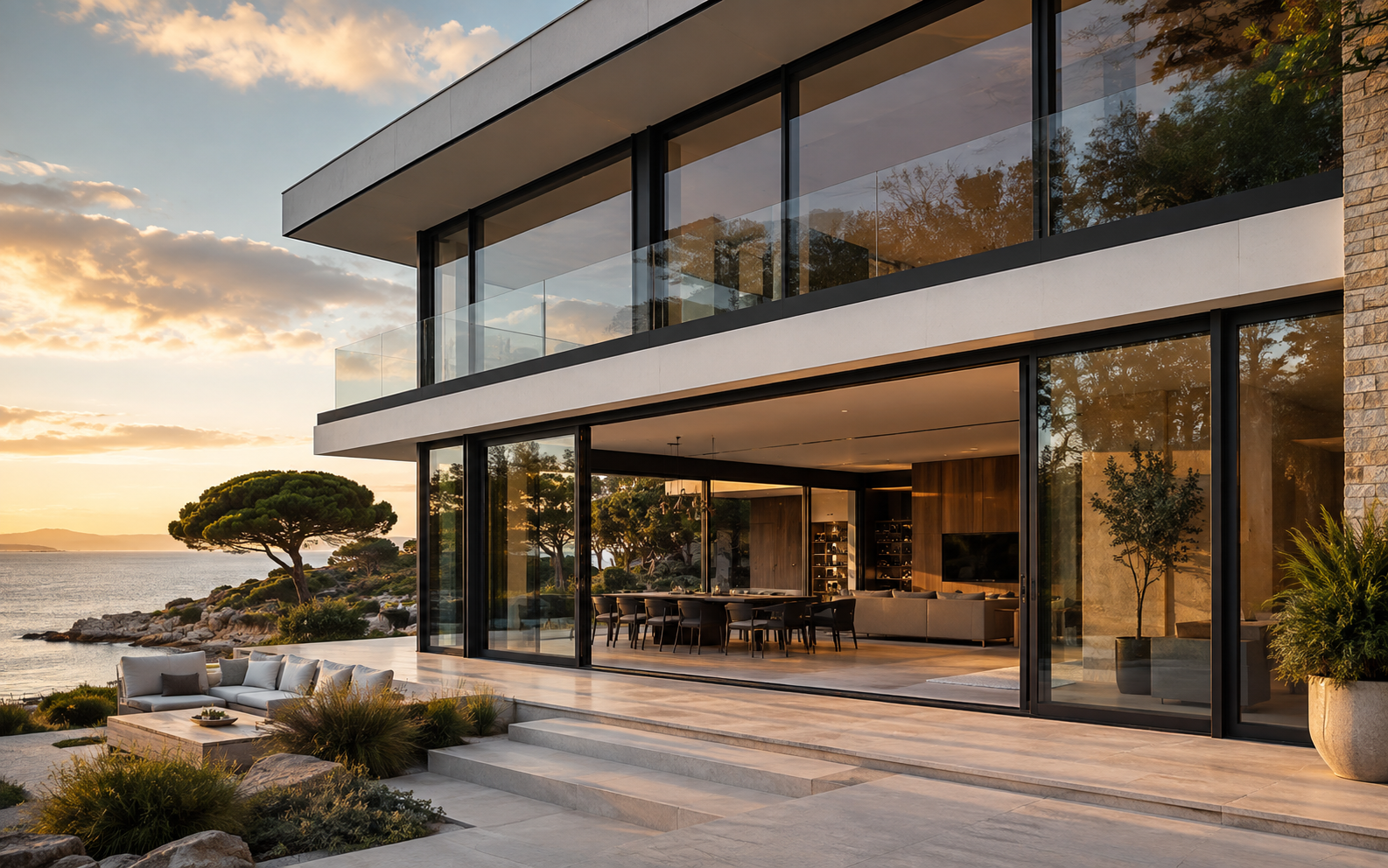
Real homes reveal the difference.
This guide examines seven strong options for 2026, considering design flexibility, energy performance, security features, durability, maintenance, and overall value. Each door category has advantages. Some suit minimalist new builds, while others work better with traditional façades or busy family entrances. Coastal properties need extra attention to protective finishes and hardware corrosion. Urban homes may benefit from acoustic glazing and stronger access control.
There is no perfect door for every property. That is worth admitting. Product availability, installer quality, local climate, and budget can change the final decision. We therefore focus on practical evidence rather than exaggerated claims. Expect clear comparisons, visible trade-offs, and a few options that look excellent but may not suit every buyer.
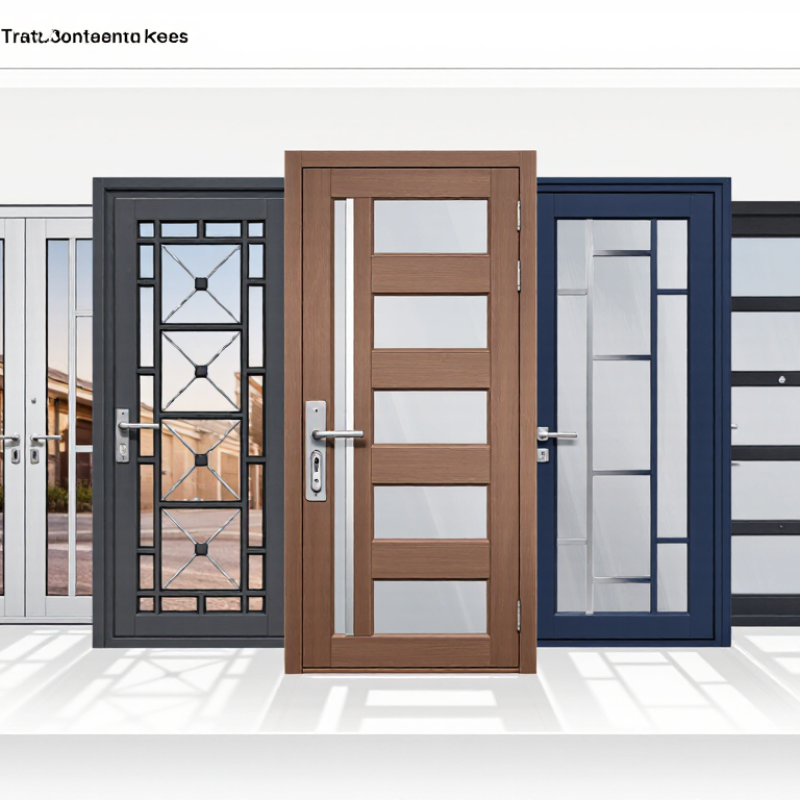
What Defines a Modern Aluminium Entrance Door in 2026
A modern aluminium entrance door in 2026 is more than a slim frame and dark finish. It combines thermal efficiency, verified security, accessible design, and lower environmental impact. The frame should include a thermal break, quality seals, and insulated glazing where appropriate. These features reduce cold surfaces around the doorway.
The IEA’s Buildings 2024 report states that buildings account for about 30% of global final energy use. Therefore, entrance doors should support the building envelope, not merely decorate it. Look for independently tested U-values, air-leakage results, water-resistance data, and documented security performance. Performance is not decoration. Small details matter.
Material transparency is becoming equally important. The International Aluminium Institute reports that recycling aluminium can use about 95% less energy than producing primary aluminium. A credible door specification should identify recycled content, responsible sourcing, and an Environmental Product Declaration where available. Vague sustainability claims are not enough.
Modern access may include concealed hinges, multipoint locking, laminated safety glass, and carefully designed smart-entry systems. However, electronic convenience should not replace mechanical reliability or emergency access planning. I would also question oversized glass panels in exposed locations. They look impressive, yet they can increase heat gain, weight, and maintenance. The best 2026 choices balance appearance with tested evidence, practical installation, and honest limitations.
7 Best Modern Aluminium Entrance Doors to Buy in 2026: What Defines a Modern Aluminium Entrance Door?
| No. | Modern Door Type | Best For | Typical Configuration | Indicative Thermal Performance | Security Target | Modern Design Features | Important Buying Check |
|---|---|---|---|---|---|---|---|
| 1 | Thermally Broken Panel Door Best Overall | Energy-efficient family homes and renovated entrances | Insulated aluminium leaf, concealed or slimline hinges, multi-point lock, optional side panel | Approximately 0.8–1.3 W/m²K | Look for tested RC2 security and a certified multi-point locking system | Flush exterior panel, narrow sightlines, large colour selection, low-maintenance finish | Confirm the declared U-value applies to the complete door assembly, not only the centre panel |
| 2 | Full-Height Glazed Aluminium Door Best for Natural Light | Contemporary homes, apartments and dark entrance halls | Double or triple insulating glazing, thermally broken frame, laminated safety glass where required | Approximately 1.0–1.6 W/m²K | Specify laminated or toughened safety glass and tested cylinder protection | Maximum daylight, minimalist frame, clear visual connection between interior and exterior | Check solar-control, privacy and safety-glazing requirements for the door orientation |
| 3 | Pivot Aluminium Entrance Door Best Statement Design | Large architectural entrances and wide contemporary façades | Oversized insulated leaf, floor-and-ceiling pivot hardware, concealed closer, optional fixed glazing | Approximately 1.0–1.8 W/m²K | Use a tested locking arrangement appropriate to the door size and weight | Wide leaf proportions, nearly invisible hardware, bold monolithic appearance | Verify structural support, clear opening, wind exposure and maximum permitted leaf dimensions |
| 4 | Slim-Frame Heritage-Style Door Best for Period Properties | Traditional façades requiring a modern aluminium upgrade | Slim thermally broken profiles, divided-light effect, insulated glass, low threshold option | Approximately 1.2–1.8 W/m²K | Specify laminated glazing, a secure cylinder and compliant multi-point locking | Fine glazing bars, balanced proportions, traditional appearance with reduced maintenance | Check whether applied bars or true integrated divisions are used and how they affect cleaning |
| 5 | Aluminium Door with Integrated Sidelight Best for Wider Openings | Entrances that need more daylight without using a double door | Single active leaf with one or two fixed insulated sidelights, matching threshold and frame | Approximately 1.0–1.6 W/m²K | Use safety glazing in sidelights located beside the opening edge | Architectural symmetry, brighter entrance zone, coordinated panel and glazing finishes | Measure the structural opening carefully and confirm the required unobstructed passage width |
| 6 | Double Aluminium Entrance Door Best for High Traffic | Large houses, shared residential entrances and accessible routes | Active and passive leaves, flush threshold, heavy-duty hinges, panic or access-control hardware where applicable | Approximately 1.1–1.8 W/m²K | Consider RC2 or RC3 testing, depending on the building and risk assessment | Generous opening width, symmetrical façade, suitability for smart-entry hardware | Check door coordination, closing force, weather seals and accessibility requirements for both leaves |
| 7 | Smart-Ready Aluminium Security Door Best for Connected Homes | Homeowners wanting keyless entry and future access-control options | Insulated aluminium leaf, reinforced lock zone, concealed cable route, keypad, biometric or electronic cylinder option | Approximately 1.0–1.6 W/m²K | Choose hardware with mechanical override, secure credentials and tested forced-entry resistance | Hidden hardware, remote permissions, activity logs and compatibility with selected smart-home systems | Confirm battery backup, offline operation, data-security provisions and emergency access procedures |
Buying note: Performance figures are typical planning ranges for modern thermally broken aluminium entrance doors and can vary with size, glazing, threshold, hardware and installation. Always request the complete door’s tested U-value, air/water/wind classifications, safety-glazing documentation and security certification for the exact specification.
FAQS
Ask for the complete door assembly U-value. Do not judge the glass alone. A thermally broken frame reduces cold bridging around the edges. Low-emissivity glass may reduce heat loss by 30–50%.
They show how the door handles drafts, rain, and pressure. Request leakage results, test pressure, and tested door size. A large pivot door may perform differently. Small differences matter.
Look for a drained threshold and clear water paths. Rain can collect near the entrance. Check the sill height and exterior flashing. A beautiful threshold can still leak.
Compare multi-point locks, protected cylinders, strong hinges, and laminated glazing. Hardware should resist corrosion, especially near the coast. Security depends on the whole assembly, not one lock.
The opening should be level, square, and properly supported. Continuous packers help keep the frame stable. A few millimetres of movement can cause stiff locks, gaps, or water entry. This is easy to miss.
Record the opening size, sill height, hardware adjustments, and weather conditions. After fixing, test the door several times. It should close without scraping, lifting, or heavy force. Basic, but often missed.
Seal the perimeter carefully. Low-expansion foam should support the joint, not replace exterior flashing or a backer rod. Uncontrolled air leakage may waste 5–30% of heating and cooling energy.
Rinse coastal or polluted surfaces with clean water and mild detergent. Keep drainage channels open. Inspect seals and hinges yearly. Replace compressed gaskets before drafts become visible. Maintenance is modest, not optional.
Ask about spare hardware, coating coverage, and replaceable components. Check warranty exclusions before ordering. Recycled aluminium can use about 95% less energy than primary production. Recovery still varies, so do not assume perfect sustainability.
No. The rating applies to a tested assembly and installation method. Uneven openings can still create sealant lines or uncomfortable drafts. I would not promise zero maintenance. That would be unrealistic.
Conclusion
Modern aluminium entrance doors in 2026 combine clean architectural design with practical performance, offering homeowners a stylish and durable way to improve their property’s entrance. This guide explores what defines a contemporary aluminium door, including slim profiles, large glazed panels, concealed hardware, thermal breaks, weather-resistant finishes, and advanced locking systems. It also explains the key features to compare before buying, such as insulation, glazing, security, accessibility, customization, and overall build quality.
The article presents seven leading entrance door styles, from minimalist flush designs and bold pivot doors to framed glass, textured finishes, and smart contemporary layouts. It also explains how to balance appearance with security and energy efficiency, ensuring the chosen design suits the building’s architecture and climate. Finally, readers will learn about professional installation, routine cleaning, hardware checks, warranty considerations, and long-term maintenance, helping them select a modern aluminium entrance door that remains attractive, secure, efficient, and reliable for many years.